
January 30, 2026
Dear Interested Readers,
The High Cost of Care Remains an Unsolved Problem For All of Us
For many years, there has been too much uncertainty about the future of American healthcare. Even those of us who have coverage that should give us a ticket to ride have complained that our access is limited. The attention of the providers we see often seems to be on their computers or something other than the problems or symptoms that concern us. We are frequently annoyed by unexpected expenses or controversies with our insurers about what is “covered,” and after paying too much for our “plans,” we are shocked by how much we must pay out-of-pocket. What isn’t uncertain is that the total cost of care we receive this year will be higher than what we paid last year, and that whatever percentage increase we receive in pay this year, the increase in the cost of care may be twice as much. Because this disturbing trend has persisted year after year for decades, our only reasonable certainty is that it will continue next year and likely for years to come.
Our president was elected because many “swing voters” trusted his many promises about what he would fix. Trump promised to be the answer to almost every concern voters had. His campaign was more about promises than policies or strategy. He bragged about what he would achieve, but what the gullible voters who were his suckers got for all of us was chaos. He was elected because enough voters had forgotten, or did not care, that he had told more than 30,000 lies during his first term. His biggest lie was that the 2020 election was stolen. For reasons that I will never understand, voters seemed to care more about the economy and our immigration problems than either their own health or the health of our democracy.
In healthcare, his promise was the bland assertion that he had “a concept of a plan.” So far, what that “concept” seems to be is to defund programs of insurance available to the poor and those who depend upon subsidies to the ACA marketplace, and to appoint RFK, Jr. to dismantle huge components of our medical research infrastructure and the work of the CDC, while appointing other fringe thinkers who have bought into his campaign of misinformation about vaccine safety to significant positions on advisory boards and important healthcare management positions.
It is interesting that life expectancy is a “lagging indicator,” and this week we learn that because of efforts during the Biden administration, and before Trump’s reelection, to treat drug addiction and manage COVID, our national life expectancy went up in 2025 to 79.4 years. Maybe “Sleepy” Joe Biden’s increase in support for the ACA’s marketplace and more generous support of our medical infrastructure helped a little. Still, we are far behind other developed economies. It will be interesting to watch what happens to life expectancy over the next few years under Trump’s “concept of a plan.”
Perhaps the president realizes he doesn’t really need to present a plausible plan to address the chronic reality that, in the moment, all of us, to varying degrees, have issues with the access, quality, and cost of care. His core constituency of billionaires, who fund his ballroom and the campaigns of the senators and congressional representatives who protect him, don’t seem to care about healthcare beyond the investment opportunities it provides. They must imagine they are above any worry for the moment, because they can shield themselves and their families with concierge care while enjoying the benefits of prior medical research. Concerns among the general public about the cost, quality, and access to care seem to be resurfacing after several years of apathy following the successful rejection of Trump’s effort to eliminate the ACA in 2017. You probably remember the moment when Senator John McCain gave the ACA a temporary reprieve by turning down his thumb.
KFF News this week quotes an article from the Washington Post stating that healthcare costs will once again be an important issue in the fall midterm elections. I can’t read the article because my wife and I cancelled our subscription to the Post last year in protest over the loss of its objectivity created when its owner, Jeff Bezos, as a self-serving act of fealty to the president, undermined the freedom of its opinion writers like Jennifer Rubin and E.J. Dione, both of whom left the paper. Every time I try to access the article, my screen is covered with a demand to renew my subscription. I can, however, give you the summary printed in the KFF newsletter. Maybe you can follow the links, and Mr. Bezos will let you read the article.
Americans’ Biggest Pocketbook Worry Is The Cost Of Health Care, Poll Reveals
Health care ranks higher on the list of concerns than the cost of groceries and housing, and voters say the cost of health care will affect their election choices in November. Also: Affordable Care Act enrollment drops by more than a million people following the expiration of federal subsidies.
This week, two articles appeared in the newspapers that I do read that gave me some hope that policy concerns about healthcare may be revived for the 2026 and 2028 elections, if we still have elections. Most of the editorials in my home area newspapers are copied and pasted from other sources like the Washington Post, Bloomberg News Service, or the L.A. Times, but on January 23 in the electronic edition of my regional paper, the local editors spoke for themselves with an editorial they entitled Editorial: Medicare for All a solution to America’s health care crisis. I was surprised to see the same article appear in the print edition on January 24 as “Universal health care remains our best option.” I liked the second title better because it suggests a mind open to more than just an extension of Medicare, a flawed program though much better than nothing. The opening paragraph highlights the problems of cost and access to care in the “Upper Valley”. There are various definitions of the “Upper Valley,” but the reach of the readership of the paper is centered in Lebanon and Hanover and extends on both the New Hampshire and Vermont sides of the Connecticut River, from about 40 miles south of Dartmouth Health to about 40 miles north toward Montpelier, Vermont. Click on the link to see what recruiting info from Dartmouth Health has to say about the area. I should also mention that, in addition to healthcare costs, the area has a significant affordable housing problem. A Dartmouth study from 2022 estimated that the area needs 10,000 units of new housing by 2030, and it is not going to happen. The editorial begins with an honest appraisal of the state of healthcare in the region and the fact that it is not much discussed.
Health care costs blow big holes in Upper Valley school budgets the and taxpayers’ wallets; federal subsidies for Affordable Care Act premiums lapse, making them unaffordable for millions; some rural hospitals and clinics shutter vital services because they are in such dire financial straits; federal cuts to Medicaid threaten to leave thousands in the Twin States without coverage; consultants warn that Vermont’s health care system is at risk of collapse; patients face months-long waits for elective surgery; a severe and continuing shortage of primary care physicians leaves many Upper Valley residents without access to basic care.
Valley News readers will be familiar, perhaps painfully so, with many such stories that have made headlines in recent months. They speak to a health care system that is broken, and perhaps going broke. What is surprising is the near disappearance from public discourse of an idea that gained traction not so long ago: universal health care coverage.
They ask a critical question, “ Why don’t we talk about such an obvious problem that needs to be addressed because it is hurting everyone in one way or another, if for no other reason than the impact on town budgets and the school systems?” I will continue to “bold” the points that seem most important to me.
Let’s stipulate at the outset that the current political climate is hostile to government-provided health care in general, as demonstrated by the recent cuts to the ACA and Medicaid, under which an estimated 15 million people could lose coverage. A comprehensive system that guarantees coverage and access to everyone on an equal basis is a non-starter at the moment.
But we do think that as many millions of people across the country experience a health care system that is increasingly expensive, inaccessible and unaccountable, the logic of universal health care may come to seem like common sense, not a communist plot.
The article celebrates Bernie Sanders’ consistency of message. It calls him the “foremost advocate of universal health care.” In their continuing admiration for the continuing consistency of Senator Sanders, they write:
He is also a source for assessing the state of the current health care system, which he notes is the most expensive in the world and which numerous studies show to be one of the worst among wealthy nations, producing life expectancy that is four years lower than in comparable countries.
As we know, and perhaps the president is loath to acknowledge, Bernie is correct on all points. We are expensive and defective. Worse, our deficiencies are fatal for many of our most vulnerable neighbors, and even for some who may think they are protected by their wealth or privilege. They repeat a Bernie quote that recently appeared in the Boston Globe.
“In America today, despite per-person spending of over $14,500 on health care annually, more than 85 million are uninsured or underinsured. The nation faces a massive shortage of doctors, nurses, dentists, and mental health professionals. Tens of millions of Americans cannot see a primary care doctor when they need one — even those who have good insurance. The country has an aging population, but nursing homes throughout the country are under-staffed and many are shutting down. The home health care situation is a disaster.”
Sure, our system of care can provide “extraordinary and compassionate care,” but not for everyone, all the time. The editorial is explicit. Our goal should be universal coverage that will “make that high quality care available to all segments of society, no matter what their economic station in life.”
They follow that statement with a warning:
It’s also a fact that there’s no guarantee that those who enjoy good health care now will continue to do so if the system becomes increasingly dysfunctional.
The editorial concludes with a vote for Bernie’s “Medicare For All” until something better is conceptualized. I wish that the simple adoption of Medicare For All could solve all of our healthcare problems, but at best, it would be only a transitional step toward the sustainable and affordable system of care that we have been trying to move toward since the end of World War II when President Truman proposed and came close to establishing a national healthcare program that would have been somewhat similar to the national healthcare that evolved at the same time, The National Health Service, in Great Britain. The link is to an article in the New York Times from April 1949 that compares Truman’s proposal to the recently established NHS in Britain.
The British objective is to make complete health services available to everyone. The Truman program’s aim is the same, within the limitations of our constitutional Federal-state relationships and considerations of expediency. Medical, dental, optical, hospital and home nursing care, eyeglasses, hearing aids and other appliances, such as wheelchairs and braces, are among the benefits contemplated under both systems. Financing Different However, Britain pays about 85 per cent of the cost out of general revenues, with only 15 per cent coming from a social insurance fund that also provides protection against old age, disability, etc. The United States program would be financed mainly by automatic deductions from payrolls to provide insurance for about 85 percent of the country’s population.
As you can read in a recent article in the Milken Institute Review, the AMA won the contest, even though 59% of Americans favored the idea. The AMA labeled Truman’s program as socialized medicine. Once again, the AMA had blocked an effort to establish universal access to care, as it had been when Harvey Cushing of the Brigham and a commanding voice in the AMA, convinced FDR, whose son was married to Cushing’s daughter, that the New Deal would go down in flames if it included universal access to healthcare. You can read the whole story in The Heart of Power, written and published in 2009 by Dr. David Rosenthal and Professor James Marone. I think the book, published during the run-up to the ACA, remains the best pre-ACA review of the efforts of our various presidents since Teddy Roosevelt’s era to improve the nation’s health.
This week, Dr. Ashish Jha, former Dean of Brown University’s School of Public Health and COVID co-ordinator during the Biden administration, wrote an insightful op-ed in the Boston Globe with a long title, “America’s health care crisis isn’t inevitable. It’s misdiagnosed. Washington keeps arguing over who should pay the bill while ignoring what’s driving costs in the first place — a policy failure decades in the making.” I have had the privilege of meeting Dr. Jha. Before going to Brown, he was a professor at Harvard’s T.J. Chan School of Public Health. In that role, he taught a class on healthcare policy at Harvard College. He invited me to attend one of his undergraduate classes in Cambridge to describe to his students the efforts we were making at Harvard Vanguard Medical Associates and Atrius Health to improve healthcare costs and quality. He has recently left his post at Brown “to dedicate time to an initiative to confront pandemic and biosecurity threats.” Dr. Jha thinks like a diagnostician. He is well-trained in internal medicine. He graduated from Harvard Medical School in 1997 and was a house officer at UCSF and a fellow at the Brigham before getting his MPH. His article about the future of our health care is structured like the thought process of a physician trying to understand the patient’s pathological problem. Any good clinician faced with a worsening patient will ask, “Do I have the right diagnosis?” Dr. Jha begins:
When doctors get the diagnosis wrong, patients pay the price. Unfortunately, that is exactly what has happened with the American health care system: Lawmakers have misdiagnosed the problem, and the American people pay the price.
For millions of working families, the cost of the misdiagnosis is obvious: Premiums and deductibles now consume so much of household income that many families delay care, drain their savings, or make difficult choices between health care, rent, and child care. Small businesses drop coverage they can no longer afford, and states divert money from schools, roads, and public safety just to keep Medicaid afloat. The United States is on track to spend more than $7.7 trillion per year by 2032. That level of spending will further erode coverage, overwhelm public budgets, and force painful tradeoffs with other essential investments.
Dr. Jha is following one of the first steps in successful medical management, describe the problem. He continues:
For decades, policy makers have treated rising health care costs as an unavoidable fact of modern life — the inevitable byproduct of an aging population, rapid medical innovation, and expanded coverage. That convenient story has allowed Washington to focus almost exclusively on subsidies — how big they are and where they come from. It’s like arguing over who should pay the restaurant bill while the price of the meal keeps climbing. But if you misdiagnose the disease, you cannot prescribe the right treatment.
He continues by acknowledging some things that we have correctly noticed. That acknowledgement is followed by a big “BUT.”
Some of the increase in spending does reflect genuine progress. More Americans are living longer. Breakthrough treatments are saving lives that once would have been lost. But a large share of our cost explosion is the result of deliberate policy choices — choices that tolerate extreme prices, reward wasteful care, permit unproductive consolidation, and embed extraordinary inefficiency into the delivery of care.
As beneficial as Bernie’s “Medicare For All” may be in transition to universal coverage, which would definitely be better, Medicare For All tolerates and would continue much of what is making our care so expensive and dysfunctional now. Dr. Jha points to deeper problems that inhibit progress:
The misdiagnosis is not just technical. It is ideological.
On the political right, the reflex is to blame government — and these days, especially the Affordable Care Act — for health care dysfunction. That story is simplistic. US health care spending was on an unsustainable trajectory long before the ACA, and while the law successfully expanded coverage, it did little to bend the cost curve. At best, the ACA slowed spending growth in the Medicare program, but it had limited impact on spending, positive or negative, among the commercially insured.
On the political left, the instinct is to blame “the market” and corporate profiteering. That story is also simplistic. In many American communities, there have been real breakdowns in the market. Patients largely cannot shop because they have too few choices. Prices are opaque. Competition is weak or nonexistent. In too many areas of America, what we call “the market” is actually a set of government-protected monopolies sustained by policy choices that reward consolidation and shield incumbents from competition.
While both sides argue, the status quo wins. Policy makers fail to take action to address why the health care costs are so high in the first place.
Dr. Jha is forcing us to look into a mirror where people of different persuasions see different things, but nobody likes what they see. Both sides try to bolster their point of view by scanning the world for evidence that what they see is right.
When the domestic argument hits a wall, the debate turns abroad. Liberals point to Denmark or the United Kingdom, two largely publicly funded systems with few out-of-pocket costs. Conservatives point to Singapore, which relies largely on health savings accounts and catastrophic coverage with more of a functioning market. The implication is that if we would simply import someone else’s system, our problems would disappear.
Dr. Jha tells a story and quotes the late medical economist Uwe Reinhardt to add gravity to his thesis and then continues:
…Health care systems are embedded in political institutions, regulatory cultures, and social expectations that cannot simply be copied and pasted. What matters is not importing someone else’s model but fixing our own — using tools that fit American institutions and American values.
The United States can lower health care costs — or at least dramatically slow their growth — without sacrificing quality or access, if policy makers choose to focus on the right levers.
He promises to get more specific and lay out a “practical reform agenda” in a series of eight upcoming columns. You can count on me to anxiously wait to read his thoughts and pass them on to you. As a preview, he writes:
…I will lay out (sometimes writing with a colleague) a practical reform agenda that could slow health care cost growth by hundreds of billions of dollars a year without cutting benefits, rationing care, or stifling innovation. The proposals target the actual drivers that affect spending: health care market consolidation and pricing, broken payment incentives, administrative waste, unnecessarily high drug costs, workforce restrictions, site-of-care distortions, and insurance design. None of these ideas are radical. All are achievable. Some require federal action; many can be implemented by states. And nearly every one will threaten a powerful political interest — which is precisely why they matter.
Dr. Jha finishes with a statement that I endorse from my personal experience:
The real question facing the country is no longer how to pay for an expensive health care system. It is why we continue to tolerate one that is so unnecessarily expensive — and what we are finally willing to do about it.
More than seventy people had commented on Dr. Jha’s column by the time I copied its URL for your convenience. Many disagreed, but he also struck a positive note with many. Healthcare is likely to be a significant issue in the 2026 midterms and may remain a defining issue in the 2028 elections. I look forward to continuing this critical conversation. I know that any set of ideas that moves us toward workable policy solutions will face forceful pushback from the status quo. Any casual student of our previous attempts at healthcare reform knows that the road ahead toward progress will be a climb up a rocky road. The alternative is a continuing slide toward problems that will be greater than the ones that pain us in this moment.
The Weather Is Still Cold, and Will Be For a While, But our Political Chill Won’t Go Away In The Spring
The Winter of Our Discontent, published in 1961, was John Steinbeck’s last novel. I never read it, or Travels With Charlie (1962), or many of his other 27 books, although I had devoured The Grapes of Wrath, East of Eden, Of Mice and Men, Cannery Row, and Tortilla Flat. Travels With Charlie was one of his better-known nonfiction travel books about a cross-country trip he took in 1960, when he wanted one more look at the country before dying. He did not die until 1968. Perhaps he never wrote another novel after The Winter of Our Discontent because some of the reviews at the time were harsh, or because his muse had left him after he was awarded the Nobel Prize for Literature the next year, in 1962.
Steinbeck lifted the title of his last novel from Shakespeare’s Richard III. Even though I never read Steinbeck’s book, and I am not that well versed in Shakespeare, “the winter of our discontent” is a phrase like “In the Bleak Midwinter,” the title of a poem and song by Christina Rossetti written in the late 19th century that often pops into my mind when the “activities of daily living” just get very hard for so many people when it is very cold or when it is not only very cold but also when we are in a time of great uncertainty, like now, when the streets of Minniapolis have become killing grounds for our contemporary version of the “brownshirted” gestapo of the early days of the Third Reich. I salute those hardy souls in Minnesota who are braving the very cold weather and the anonymity of the masked paramilitary forces on their streets to express their objections to what is happening in the moment, and their fears about the future that may follow if the atrocities of this moment continue to grow.
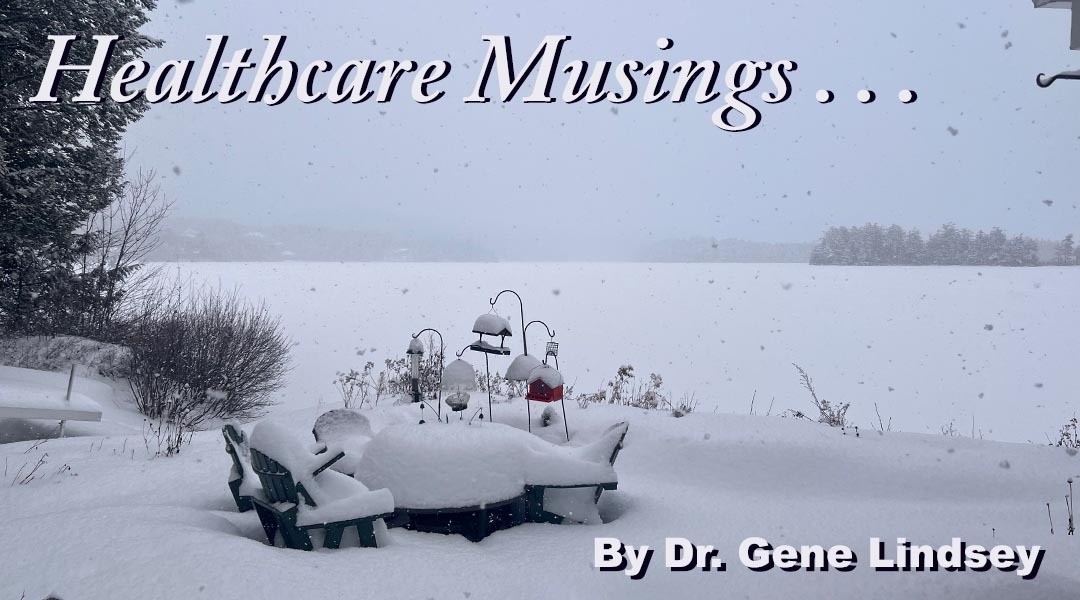
Today’s header was taken in the aftermath of the storm that blew through the Northeast last weekend. I think what was left after the storm was kind of beautiful. I see no beauty at all now or in the near future on our shared national horizon whenever the ICE storm in Minnesota finally fizzles. Nevertheless, the full phrase in Shakespeare’s Richard III does acknowledge that Spring eventually comes.
“Now is the winter of our discontent
Made glorious summer by this sun of York”.
At the end of Shakespeare’s play, the Wars of the Roses are over, and there is reason to be hopeful. Let’s live in the hope and expectation of the eventual arrival of both our meteorological and political Springs.
Be well,
Gene
I look forward to your weekly letters – am missing this week’s – hope that all is ok.