
December 19, 2025
Dear Interested Readers,
Remembering During the Holidays That Not Everyone Has Enough to Eat, and Trying to Do Something About It.
“Food insecurity” is a good enough phrase, but my take is that it is a clinical euphemism that takes the painful edge off a disgraceful national issue. It “medicalizes” what should be a source of collective shame that we should unanimously want to rectify immediately, and frames this huge social issue as something that almost sounds like a chronic medical problem with which we will just learn to live, giving it periodic attention as some exacerbation reminds us that we still have the problem.
In the early years of my medical career, I worked extensively in local emergency rooms. Between 1972 and 1979, while still in training and then during my early years at Harvard Community Health Plan, I often worked a 24-hour moonlighting shift on a weekend day or holiday, as well as a 12-hour weeknight shift from 7 PM to 7 AM, mostly at Lowell General Hospital —just north of Boston but also at the Cardinal Cushing Hospital south of Boston in Brockton. Thirty-six moonlighting hours a week, plus my “daytime job,” was a frequent reality for me. I was motivated to pursue this sleep-denying form of existence to augment the paltry compensation of the training years.
Looking back on those grueling years, which I am sure were equally painful for my wife and two small sons, I realize that the upside of the experience was that, as the only doctor in a community hospital in the wee hours of the morning, I learned a lot bouncing back and forth from the emergency room to the ICU or answering a call from a nurse on some other ward. I would rarely call the patient’s doctor to wake them up for advice because they would be annoyed and usually couldn’t offer helpful advice. Needing to solve problems in the middle of the night alone enabled me to develop a self-reliant confidence that I would never have acquired as a very well-supported house officer in a famous teaching hospital.
Early on, I realized that for many of the lower-income residents in the greater Lowell and Brockton communities, the emergency room served as their only contact with healthcare and was essentially their “primary physician.” I spent much more time in Lowell and would usually know when I would be there for the next two or three months, so I began to schedule “return emergency visits.” Much of my time was spent with colds, lacerations, and minor injuries. Still, most of the significant non-trauma “emergencies” were exacerbations of a poorly managed chronic disease. My prediction is that as people begin to drop their health insurance as the cost of care continues to rise, we will see more emergency room use because of a lack of chronic disease management.
I view most of the deficiencies in our Social Determinants of Health as akin to poorly managed chronic disease problems. Just like a poorly managed diabetic or person with neglected COPD may be forced to go to an emergency room because of the sudden worsening of their problem caused by some unexpected external challenge, so too are our “societal chronic disease” problems prone to sudden deterioration with external stresses. That is certainly what we saw recently, when it appeared that SNAP benefits would be halted at least temporarily during the government shutdown. That storm seems to have passed, but we are still quite vulnerable to the whims of the president and his chief administrator of social pain, Russell Vaught, the Trump Cabinet member who leads the Office of Management and Budget and is a principal author of Project 2025.
Russell Vaught’s contributions to our domestic pain over the last year are among the main points in a column by Jamelle Bouie in The New York Times on Wednesday, entitled “The White House Is a Lost Cause.” In that column, Bouie argued that the president is uninterested in most of his responsibilities and cares little about anyone other than the wealthiest and most influential sycophants who surround him and continuously flatter him. As a result of his lack of concern for our most disadvantaged Americans, he is deferring the management of domestic issues, like social programs for the needy, to Vaught. I have bolded my points in what Bouie writes:
Russell Vought, the director of the Office of Management and Budget, is the de facto shadow president for domestic affairs. As one senior government official told ProPublica, “It feels like we work for Russ Vought. He has centralized decision-making power to an extent that he is the commander in chief.” It was Vought who orchestrated the administration’s assault on the federal bureaucracy, including the wholesale destruction of U.S.A.I.D. It was Vought who either froze or canceled hundreds of billions of dollars in funding for anti-poverty programs, H.I.V. reduction initiatives and research into science, medicine and technology. And it is Vought who has been pushing the boundaries of executive power as he attempts to turn the federal government into little more than an extension of the personal will of the president — as channeled through himself, of course.
Wikipedia notes that Mr. Vaught is currently a Baptist deacon and once considered becoming a minister. I don’t know what the Gospels in his Bible say, but in mine, the quotes from Jesus are all about feeding the hungry, ministering to the sick, and caring for the poor. He even did those things across national boundaries into Samaria and Syria. How does that square with attacking social programs like SNAP, undermining medical care, and obliterating most of our international efforts to fight disease and hunger through the destruction of USAID? I should restain myself and remember “Judge not that you be not judged.” (Matthew 7: 1 KLV)
When it became clear that “food insecurity” was being exacerbated from a poorly managed chronic disease to a full-on emergency due to the government shutdown, Kearsarge Neighborhood Partners decided to convene a meeting of interested non-profit organizations and food banks in our region to develop a plan that would ensure necessary nutrition for the several thousand SNAP recipients in Merrimack and Sullivan counties that contain most of the communities that make up the Kearsarge-Lake Sunapee Region of New Hampshire which covers much of the geography along Interstate 89 between but not including Concord to the south and not quite to the Labanon-Hanover area to the north. My home in New London is in the geographic center of this region.
There is no public transportation in the region. In many ways, except for our proximity to Dartmouth, a world-class medical center only thirty miles north of New London, we share many of the challenges of rural and small-town America. We are a “purple” region. Kamala Harris carried New London, but several towns in the Kearsarge-Lake Sunapee Region supported the president and his MAGA movement. Many of the representatives in our state legislature from our area are Republicans and support the president and his policies. KNP favors no political party or religion as we face the challenges of our region.
One critical access hospital and one school district serve most of this area. (The town of Sunapee maintains a small separate school district supported by huge property taxes from multimillion-dollar homes on Lake Sunapee.) There are two supermarkets — one at exit 9 in Warner, New Hampshire, and the other 20 miles north in New London, near exit 12, where I live.
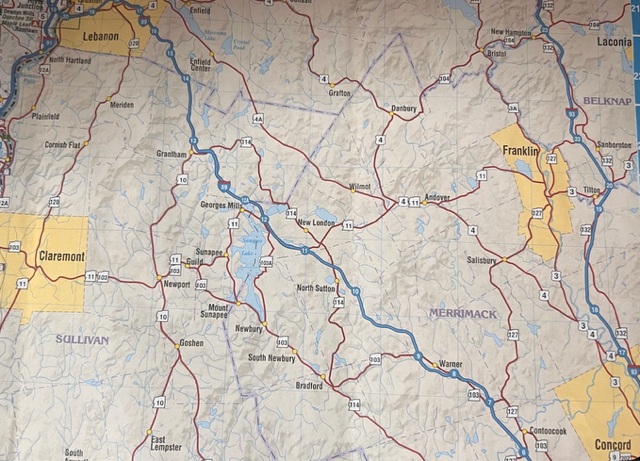
KNP works with neighbors in the towns in and around New London, including Andover, Bradford, Danbury, New London, Newbury, Springfield, Sunapee, Sutton, Warner, and Wilmot. At times, KNP also assists people in Newport.
I know of four food banks in the region, and there are food cooperatives. One innovative cooperative is Sweet Beets, in Bradford, that frequently offers free fresh vegetables when they are in season, and is part of the Kearsarge Food Hub, which describes itself as:
[a]…nonprofit organization serving the greater Kearsarge Area in central NH, we envision a resilient and connected community where everyone is empowered to access healthy local food, where farmers are supported and the land is nourished, and all people share a common sense of place.
Kearsarge Neighborhood Partners (KNP), of which I am a founding board member, considers addressing food insecurity as part of its mission. Each spring, KNP sponsors a gardening program called “Tray It Forward” in conjunction with a local garden center and a fresh food stand that farms many acres, some of which are within a mile of the center of town. How rural is that? KNP also has a “gleaning” program for apples and vegetables in the fall. During the growing season, the hospital offers free vegetables once a week, mostly to patients and their families.
KNP considers itself a “convening” organization. In early November, we sponsored an all-day seminar based on the “Bridges Out of Poverty” curriculum, which we held in a rented space at the local college. More than 100 concerned community members attended the program. When the “emergency” precipitated by the threat to SNAP became apparent, our leadership organized a meeting titled “FEED Kearsarge” that took the loss of SNAP funding as a threat to the community and began to search for local solutions by pooling all of the community resources that could be found. We were following Rom Emanuel’s advice to never waste an emergency. The first meeting of FEED Kearsarge had more than thirty participants from various organizations in the region.
The most significant insight for me that has evolved in this moment that other participants share in the FEED Kearsarge effort is that although the storm that was precipitated by the threat to SNAP seems to have abated, the chronic problem of insufficient food for many in our region, despite organized efforts, will persist as the situation settles back into its chronic inadequacies. For that reason, the FEED Kearsarge coalition met again this week to begin considering more robust solutions to chronic hunger in our area.
Another meeting is scheduled for next week, and we will continue to meet regularly as we work to address food insecurity in the Kearsarge region of New Hampshire. Collectively, we have resources. The challenge is coordinating and expanding those resources for the region’s benefit. We hope to effectively address access to nutritious food as a critical Social Determinant of Health. We realize that, though it may not be evident to those among us who are well fed or overly fed, hunger in the community ultimately diminishes the quality of life for everyone and will, in some way, eventually be a liability for us all. I am not being facetious when I point out that, in a community, there is real self-interest in caring for the well-being of others.
One of the first steps in any strategic process is to describe the problem before describing a vision of the solution. One of the co-founders and a current leader at Sweet Beets and the Kearsarge Food Hub, Hanna Flanders, produced a draft statement to which others have added their thoughts. My opinion is that the current document is terrific, and we hope to make it even better before publication. The current draft begins:
SNAP Reinstated after Shutdown, but food insecurity continues to grow.
Families are struggling to make ends meet right here in the Kearsarge community. Here’s why.
The draft continues with local statistics that shore up the message. I continue to bold ideas that I want you to consider:
We recently faced a temporary lapse in SNAP benefits, affecting 76,000 residents in New Hampshire. SNAP – formerly known as food stamps – is a supplemental program that gives folks a little extra money to buy groceries. Most of the people that benefit from this program are working adults, people living with disabilities, families with children, seniors, or people facing a lost job, reduced income, or caretaking responsibilities.
For all food buyers there is a larger, ongoing issue: food affordability. This crisis is leading to widespread food insecurity and economic anxiety for many people…
…There’s a lot of political energy behind food access right now, but whether or not neighbors have enough food to eat is not a political or partisan issue. Access to food is a basic human right and food security is a matter of local and national security; when neighbors are hungry, entire communities suffer. The reality is, people face hunger every day right here in our Kearsarge community and the problem is only getting worse.
Ms. Flanders, the principal author, is a data-driven, systems-savvy young social entrepreneur with a deep passion for her community. The document continues with facts that most comfortably well-off and well-fed people don’t appreciate.
Here in Merrimack County, the food insecurity rate is about 9.8%, which translates to roughly 11,000 people facing a lack of access to sufficient food, according to Feeding America.
In the Kearsarge School District, 15.11% of students qualify for free and reduced lunch, which translates to over 250 students. The nearby town of Newport [My comment, a real rust-belt like community that has lost most of its manufacturing base] has a staggering 50% of students eligible for free and reduced lunch. These numbers are based on families whose income is below 185% of the federal poverty line, which was $50,500 annually for a family of four in 2023.
Beyond food prices, neighbors face escalating costs across the board while income rates just aren’t keeping pace. According to the New Hampshire Fiscal Policy Institute, mortgage costs have doubled since 2015 for a median-priced single family home, while health care deductibles have increased 323% since 2005. We’re about to face another extreme spike in healthcare costs, with the loss of the Affordable Care Act tax credit.
The truth is, many people are doing everything they can to make ends meet but the math just isn’t adding up. This is not a failing of the individual; it is a systemic issue of affordability.
This is a terrific draft, but there are plans to shorten and improve it. After others finish making their contributions, it will be part of a region-wide educational process that uses the weekly newspaper and other educational avenues, such as messages delivered in the publications of the area’s churches and civic organizations. As the article continues, readers will learn more about the FEED Kearsarge coalition.
FEED Kearsarge is a collaborative network working to advance Food Education, Expansion and Distribution in our local community. We seek to work beyond partisan boundaries and harness the power of our collective efforts to feed and support each other through this challenging time. We are a group of food pantry volunteers, community health workers, farmers and food producers, educators, community organizers, churches, and concerned citizens who see this crisis of affordability – and its effect on food security in our region – as a call to action.
The first step is getting a handle on the problem, which only stands to worsen in the months ahead with the policy choices coming from the federal and state government. SNAP, for instance, is facing billions of dollars in cuts, passing on more costs to the state and kicking many off the program from the latest changes in this summer’s budget reconciliation law.
Now’s the time to wake up to the reality of hunger and food insecurity right here in the Kearsarge community and respond to the urgent need while creating long-term change that supports greater access to sufficient, nutritious foods for all. During the past month, we have seen so many inspiring examples of people, businesses and organizations stepping up to be part of this solution. Please keep it up!
Next, after acknowledging the current problem and the willingness of so many to join in the search for a solution, the document begins to describe the way forward. Ultimately, it is a call for community action.
But now we need to take these efforts to the next level by expanding them, improving our communications, coordinating our efforts and finding more creative ways to reach our neighbors that need help. Stay tuned for more information on the 1st Annual FEED Kearsarge Food Security Summit coming up in March of 2026. We invite you to come to deepen your understanding of the reality of food insecurity in the Kearsarge Region and learn how we can all be a part of the solution.
That is the gist of our project’s current status, but as the article will emphasize, there is more to come. Our high school is at the center of our region, just off exit 10 in Sutton. We will be gathering there in March, and there has already been a substantial planning effort for an all-day meeting that will attract as many as 200 participants. I am informing you of what we are doing, with the hope that you might find our plans, ideas, and passion for improving food security for our neighbors motivating for you in your community. If you have plans underway to address the chronic problem of food insecurity in your community, you might share them with us. We can all be assured that solving the problem of chronic food insecurity in America is not very high on the “to-do list” of Russell Vaught and will never cross the mind of our president.
There is already a very robust document tentatively outlining the speakers, participants, and planned breakout groups for our March gathering. I am excited that it looks like Dartmouth Health may participate through its CARHE program. CARHE is an acronym for a Dartmouth Health program that seeks to address the Social Determinants of Health. The letters stand for Center Addressing Rural Health Equity. I am excited about the plans. It is much more satisfying for me to inform you of efforts in my community to improve the Social Determinants of Health than to continue to describe my enormous disappointment as I watch the Trump administration destroy the progress made over several decades of effort to improve healthcare and the Social Determinants of Health for every American.
When I become discouraged about our collective future, I find great benefit and hope in the energy of so many committed individuals in my community. I am reminded that we are in Advent, the month-long run-up to Christmas. The themes of Advent are Hope, Joy, Peace, and Love. Our church bulletin is published early each week for those who may attend online. In the order of service for this week, I read:
FIRST BAPTIST CHURCH AT WORSHIP
New London, New Hampshire
December 21, 2025
FOURTH SUNDAY OF ADVENT
Lighting of the Advent Candle
LOVE
Today, we relight the first three candles of the Advent wreath: the candles of Hope, Peace, and Joy. Now we light the fourth candle of Advent. This is the candle of Love.
Jesus demonstrated self-giving love in his ministry as the Good Shepherd. Advent is a time for kindness, thinking of others, and sharing with others. It is a time to love as God loved us by giving us his most precious gift. As God is love, let us be love also. In the gospel of John, we find these words:
I give you a new commandment, that you love one another. Just as I have loved you, you also should love one another. By this everyone will know that you are my disciples, if you have love for one another.”
John 13: 34- 35
I find it is hard to square much of our president’s agenda or the efforts of Mr. Vaught with the themes of Advent. From my reading of scripture, what we are seeing daily emerging from the White House and supported by many religious leaders is an abrogation of concern for the poor, the sick, and the visitor in our midst that is fundamental to most of the world’s religions. I offer you a recent book, The Separation of Church and Hate, by John Fugelsang, which provides a very accurate and humorous description of our confusion about the interface between religion and politics.
I hope that you are not offended by my use of the Advent themes. The principles are reflected in every religion and are the core motivation for those who call themselves secular humanists. Where would we be in our ability to care for the sick and ponder ways to spread the benefit of our wealth and knowledge, unless these principles were not very natural inclinations for most of us? We see them in children. As adults, we sometimes get so busy and distracted with our own issues that we forget what we knew intuitively as children. That is the theme I take away from Chris Van Allsburg’s Christmas tale, The Polar Express, which was adapted into an animated film starring Tom Hanks. If you know the story, you will remember that it is a metaphor that suggests the spirit of Christmas is like the tinkle of a bell that many adults have lost the ability to hear. I believe that if you can hear the tinkling of the bell this holiday season, you must be concerned about the suffering around us, manifested in hunger, homelessness, and the loss of medical care, which may worsen for many of our neighbors in the New Year, unless we work together to make a difference.
Despite a Few Warm Days and Some Rain, It Looks Like We Will Have a White Christmas
On my way home from an errand earlier this week, I was driving around the east end of our lake and was startled to see a man having a terrific time “paraskating.” It was the closest that I have ever been to this dramatic activity. The skater was moving at a blistering pace, going back and forth over several hundred yards of ice. His kite, as you can see, is huge and colorful. I am not going to be taking up the sport; I am not even a proficient skater. My excuse is that I was raised where the only ice is in tea. Despite being “skating-impaired” myself, I was impressed with the scene and eager to share the image with you.
Wherever you are, whether there is snow or not, and whatever holidays you celebrate, I hope that during these last few days of 2025, you will find joy and peace with friends and family as you recognize the importance of including everyone in your sense of community.
Be well,
Gene