August 1, 2025
Dear Interested Readers,
Feeling Kicked To The Curb
In the aftermath of the passage of the One Big Beautiful Bill (OBBB), a flood of articles has emerged attempting to forecast the damage to healthcare that will occur, at a minimum, over the next three and a half years. January 2029 is most likely the earliest moment when we could expect some relief. That hope assumes the election of a Democratic president who would initiate urgent reversals through Executive Orders, supported by a progressive Congress that would seek to quickly establish laws founded on policies aimed at improving the Social Determinants of Health for the disadvantaged. At that time, actions from Congress and perhaps more executive orders could also begin rebuilding our medical research capabilities, reestablishing our interest in public health measures worldwide, restoring academic freedom in our universities, and returning to programs and policies that promote DEI initiatives.
I have spoken to many friends and read many articles that suggest to me that between now and January 2029, many of us, especially the poor and the near poor, will feel “kicked to the curb.” I fear that we have not seen or imagined the worst yet. There is no way of assuring that there won’t be a solidification of the powers that Trump has grabbed with the assistance of the Supreme Court. It sounds like an unrealistic nightmare or an idea coming from a conspiracy promoter, but it could be possible that there won’t be legitimate elections in 2028. To give that seemingly absurd possibility some credibility, I would ask you who would have imagined our current misfortune ten years ago when our wannabe autocrat rode down his gilded escalator to announce his candidacy for president? He sounded just as absurd then when he promised to save the nation from illeagal immigrants who were either rapist, murderers, or mentally ill as he does now with his tariffs that may further disadvantage those who live on the edge of economic viability.
As I have replayed in my mind the decline of our democracy in the wake of the emergence of MAGA philosophy, the phrase “kicked to the curb” frequently pops into my head like a tune that gets stuck in your mind, an earworm. Google’s AI defines “kicked to the curb” as:
“Kicked to the curb” is an informal idiom meaning to abruptly and unceremoniously dismiss or reject someone or something, often in a harsh or callous manner. It can be used in various contexts, but is most commonly associated with ending a romantic relationship or dismissing an employee. The phrase implies a lack of respect or consideration for the person or thing being discarded.
Further on, the Google Bot adds:
The core meaning is to get rid of something or someone, often in a way that is final and without much thought or care…The phrase is thought to have originated in the African-American community and may be related to the practice of putting trash out at the curb for collection.
That sums it up for me. He is treating our history, our values, and many of our people like trash. The irony will be that many of his supporters, some of whom are quite wealthy and have thought they had much to gain from fealty to him, will eventually discover that to him, they are also trash. That is the way a narcissist treats others.
It’s been over a decade since the ACA went into effect in 2014, fifteen years since the Triple Aim was articulated in 2008, almost a quarter century since Crossing the Quality Chasm was published in 2001, more than thirty years since the healthcare quality movement began to pick up speed in the mid-nineties, and it has been eighty years since the NIH began to support medical research at the end of Warld War II. Until about 2009, when the “Tea Party” movement emerged, we enjoyed a bipartisan investment in making progress. We staggered through Trump’s first term because he was just a “wannabe” surrounded by people who controlled his most egregious inclinations. Now, after an interim of four years during which he has totally captured his party and cleansed it by fear of any individuals in opposition or collective attempts to control his most disgusting actions, many of our people and most of our political norms and liberal instituitions, have been undermined and “kicked to the curb” in a short six months.
One wonders how long it will take for the nation to recover what it has lost if MAGA philosophy and the damage done by those who are seeking to enact much of Project 2025 were to begin to lose power in the 2026 midterms and be completely rejected in the 2028 presidential election. I have read various predictions, but some estimate it will be decades before research recovers. I think it will take decades, if ever, for us to completely recover from our collective “Trump-induced PTSD.”
Recently, in the introduction to an episode of his podcast about conspiracy theories and The MAGA movement, as demonstrated through the “Epstein Affair” that is dividing the MAGA stalwarts, Ezra Klein made a statement that I thought was an excellent overview of where things stand after six months of Trump chaos:
Donald Trump is a corrupt elite. He is now, and he always has been, selling out the people who believe in him.
Liberals always want to make this point in the framework we have of the world. Here’s my version of it: Trump is a champion of people who are heavily dependent on Medicaid and SNAP. He just absolutely betrayed them. He cut about a trillion dollars of Medicaid and food assistance to finance tax cuts for him and his rich friends. He did that while denying he was cutting Medicaid — lying to the people who believed in him.
In my framework of the world, that is corruption. That is what the worst elites do when they get power.
It seems to me that if we are going to avoid long-lasting damage to our country and have it become the worst possible manifestation of many of its chronic concerns against which we have been struggling for two centuries in our effort to become a “more perfect union” and live up to the challenge toward which we were struggling to make progress in healthcare, more people, more voters, need more clarity about what they have lost. So far, the “red ink” generated for the soul of our nation remains largely in the future, but unfortunately, there is no peaceful miracle by which we can excise this lesion that is our president before the next two elections. The job now is a task in large-scale education that is made more difficult by the complexity of the issues. An article published this week in KFF News and shared with NPR is a good start in that large-scale education effort. The article Trump Voters Wanted Relief From Medical Bills. For Millions, the Bills Are About To Get Bigger was written by Noam N. Levey. Mr. Levey focuses on healthcare, but the education of voters needs equal attention in every one of the many areas of drastic change outlined in Project 2025, the strategic plan that he denied knowledge of as one of his many pre-re-election lies. The article begins with what most of us already understand:
President Donald Trump rode to reelection last fall on voter concerns about prices. But as his administration pares back federal rules and programs designed to protect patients from the high cost of health care, Trump risks pushing more Americans into debt, further straining family budgets already stressed by medical bills.
Millions of people are expected to lose health insurance in the coming years as a result of the tax cut legislation Trump signed this month, leaving them with fewer protections from large bills if they get sick or suffer an accident.
I would expect that many Trump voters from the middle class expected that their neighbors, a few rungs down from them on the socioeconomic ladder, might feel a little pain, but they did not expect that the “ripple” effect of the so called “One Big Beautiful Bill” could rock or sink their financial boat or have any effect on their access to the care they might need and thought they could expect. Mr. Levey continues with the intent of demonstrating how we will all be damaged, which will be a surprise to many Trump voters who never understood their vulnerability.
Let’s say that you have a good job, perhaps you are a budding entrepreneur or gig worker who earns a good living, and you are taking advantage of the marketplace that was created by the ACA. How is the OBBB going to impact you? Aren’t you going to have lower taxes? Maybe you are looking forward to no longer needing to treat tips as an “under-the-counter” transaction. What you don’t know is that the subsidies that you took for granted to make your health insurance very affordable will be substantially reduced, and your costs may go up to the point that you will choose to be uninsured. Mr. Levey explains:
At the same time, significant increases in health plan premiums on state insurance marketplaces next year will likely push more Americans to either drop coverage or switch to higher-deductible plans that will require them to pay more out-of-pocket before their insurance kicks in.
Smaller changes to federal rules are poised to bump up patients’ bills, as well. New federal guidelines for covid-19 vaccines, for example, will allow health insurers to stop covering the shots for millions, so if patients want the protection, some may have to pay out-of-pocket.
The new tax cut legislation will also raise the cost of certain doctor visits, requiring copays of up to $35 for some Medicaid enrollees.
Ouch, that will hurt for several million Trump voters as well as for “pinko progressives” like me who voted to perpetuate the “deep state,” that Kamala’s election would have ensured. But the bad news is not over for the Red Hat faithful and their poor and progressive victims. Despite greater access to care and better coverage, medical debt has remained a major cause of bankruptcy. President Biden had put into place several protections for those with medical debt to protect their credit ratings. Without much notice, those protections are now gone, which will impact them in surprising ways when they need credit. Many people don’t notice and appreciate what they have until they lose it. Again, Mr. Levey is an apt teacher:
And for those who do end up in debt, there will be fewer protections. This month, the Trump administration secured permission from a federal court to roll back regulations that would have removed medical debt from consumer credit reports.
That puts Americans who cannot pay their medical bills at risk of lower credit scores, hindering their ability to get a loan or forcing them to pay higher interest rates.
“For tens of millions of Americans, balancing the budget is like walking a tightrope,” said Chi Chi Wu, a staff attorney at the National Consumer Law Center. “The Trump administration is just throwing them off.”
Or, as I would say, kicking them to the curb.
Ironically, the MAGA base often overlooks the lies and contortions of the truth that have been a key component of the president’s remarkable success. Those who do acknowledge his lack of honesty might feel that he is lying to others, not them, and it’s part of his unique “art of the deal.” Mr. Levey points out that he is doing it again. Both Levey and Ezra Klein suggest that, frequently, in Trump’s crazy world, his MAGA voters are the target for his “con.” It is indeed amazing that as he compromises their economic future and access to healthcare, they praise him and trust him as he kicks them to the curb.
The president and his Republican congressional allies have brushed off the health care cuts, including hundreds of billions of dollars in Medicaid retrenchment in the mammoth tax law. “You won’t even notice it,” Trump said at the White House after the bill signing July 4. “Just waste, fraud, and abuse.”
But consumer and patient advocates around the country warn that the erosion of federal health care protections since Trump took office in January threatens to significantly undermine Americans’ financial security.
But wait, didn’t the most naive of the MGA faithful from all levels of our society vote for him because he would be the best candidate for their pocketbooks? Perhaps many of the president’s supporters prioritize their fiscal health higher than their physical health. Maybe seeing progressive elites suffer is more satisfying than being sure of your family’s access to the care they might need in the future. Perspectives change quickly when you or someone close to you suddenly has a significant health concern. Being told that you have cancer is one of those events that changes everything. Becoming concerned about the president’s healthcare policies after you have a significant diagnosis is like buying a fire extinguisher after you smell the smoke from your burning roof. Levey continues:
For Americans with serious illnesses such as cancer, weakened federal protections from medical debt pose yet one more risk, said Elizabeth Darnall, senior director of federal advocacy at the American Cancer Society’s Cancer Action Network. “People will not seek out the treatment they need,” she said.
Trump promised a rosier future while campaigning last year, pledging to “make America affordable again” and “expand access to new Affordable Healthcare.”
Polls suggest voters were looking for relief.
About 6 in 10 adults — Democrats and Republicans — say they are worried about being able to afford health care, according to one recent survey, outpacing concerns about the cost of food or housing. And medical debt remains a widespread problem: As many as 100 million adults in the U.S. are burdened by some kind of health care debt.
If sixty percent of the country is now worried about the cost of care, and 100 million Americans, that is about one in three of us, already have some kind of healthcare debt, we do have a problem that will only get worse for those hard-working MAGA enthusiasts who wanted to pay less for eggs and looked down on those who depended on our tattered social safety service safety net. The outlook is dismal and will get darker before we see what President Reagan falsely called “Morning in America.” We sort of survived Reagan, but we have never fully recovered from his attack on “welfare queens,” which was a comment loaded with implicit bias toward our most disadvantaged citizens. In the last election, many voted for their own perceived welfare, not realizing that they were vulnerable to the sinking of the boats of the “others” among us. It is even sadder when you realize, while looking back, we were making progress, and now what progress we had made has been “kicked to the curb”:
Despite this, key tools that have helped prevent even more Americans from sinking into debt are now on the chopping block.
Medicaid and other government health insurance programs, in particular, have proved to be a powerful economic backstop for low-income patients and their families…Medicaid expansion made possible by the 2010 Affordable Care Act led to measurable declines in medical debt and improvements in consumers’ credit scores in states that implemented the expansion.
And Trump discarded that success! Remember, he said that he had a “concept of a plan” to improve healthcare. In an article published last week by Miranda Yaver, assistant professor of health policy and management at the University of Pittsburgh, there is a relationship between the “OBBB” and the lie that it shares with “the concept of a plan.” The article begins:
For more than a decade, Republicans have argued that the Affordable Care Act (ACA) — often referred to as Obamacare — is irredeemably unworkable. With the so-called “big, beautiful bill,” President Donald Trump and his GOP allies have enacted policies to help make that true. Americans across the country will soon learn, if they have not already learned, that the president’s “concept of a plan” for health care is to make health insurance prohibitively expensive for millions.
Mr. Levey ends his report by letting us know that the stage is set for things to get worse for the poor, the near-poor, and those who have benefited from a healthcare marketplace made more affordable by President Biden’s policies that are now effectively blocked.
The number of uninsured could spike further if Trump and his congressional allies don’t renew additional federal subsidies for low- and moderate-income Americans who buy health coverage on state insurance marketplaces.
This aid — enacted under former President Joe Biden — lowers insurance premiums and reduces medical bills enrollees face when they go to the doctor or the hospital. But unless congressional Republicans act, those subsidies will expire later this year, leaving many with bigger bills.
Federal debt regulations developed by the Consumer Financial Protection Bureau under the Biden administration would have protected these people and others if they couldn’t pay their medical bills.
The agency issued rules in January that would have removed medical debts from consumer credit reports. That would have helped an estimated 15 million people.
But the Trump administration chose not to defend the new regulations when they were challenged in court by debt collectors and the credit bureaus, who argued the federal agency had exceeded its authority in issuing the rules. A federal judge in Texas appointed by Trump ruled that the regulation should be scrapped.
I think a lot of people should feel “kicked to the curb.” Will they ever understand just how it all happened? I fear that when more people realize the personal suffering that was programmed into the OBBB, they will be told by this president that their pain is the result of the policies of “sleepy Joe Biden.” It will just be one more lie among tens of thousands.
Interesting Things Can Be Seen At Dawn and A “Rescue”
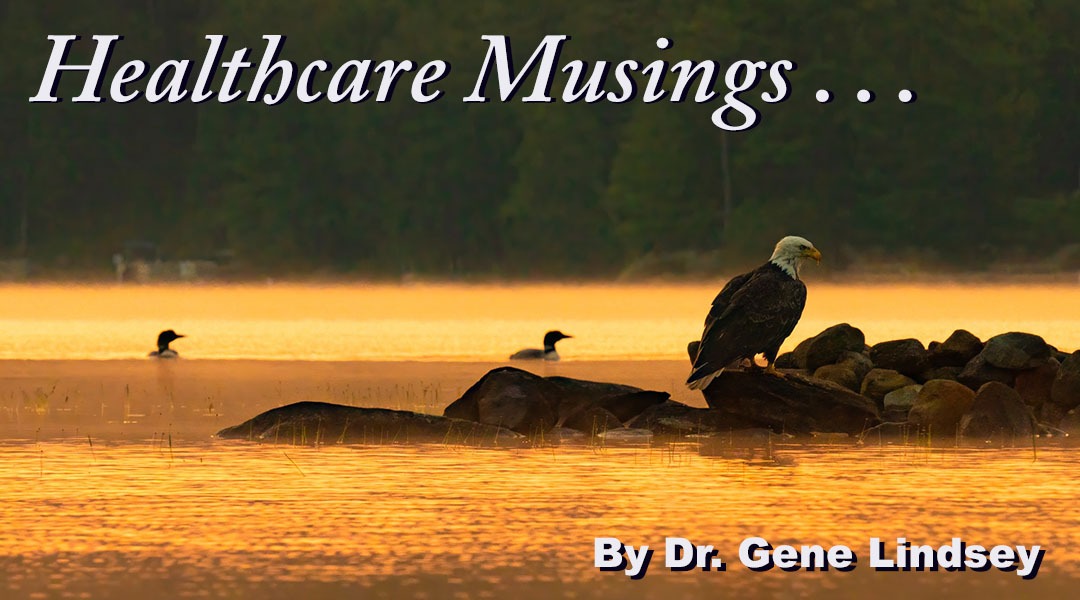
My friend and neighbor Peter Bloch posts beautiful videos of the natural beauty near us. His most recent video is worth a few minutes of your time. It presents a sunrise visit to a pond near us where he captures interactions between adult and young loons. A few days earlier, he had posted a “study” of “loon rowing” that you might find fascinating. He published his most striking photo of the week on the Facebook page of Little Lake Sunapee this Wednesday with the title “Eagle of the Dawn.” I have made it the header for this week’s letter. In his little essay that accompanied the picture, he wrote:
Dawn patrol on Little Lake Sunapee was another delight, for me it really is worth it to get up early and get out on the water. The water is glassy, the light is magical and the birds come out to play.
Our local bald eagle (is there more than one here?) was sitting on the edge of the rock “bath tub” at the tip of Colby Point, and two loons swam by the eagle on one side, passed thru the channel and then cruised by the eagle on the other side, in both cases the loons were within 40 feet of the eagle, and they lived side by side peacefully, probably because the loons knew the eagle has to make a big production of lifting off from the rocks, so the loons would have plenty of time to dive.
Then the eagle flew up on to a dead tree nearby, and THAT got the loon’s attention for sure, they were squawking and vocalizing like crazy, my theory is that they were letting all the other loons on the lake know that there was danger, because the eagle can much more easily and quickly attack from that higher perch.
And the eagle perched peacefully up there in that branch for at least an hour, I never saw him fly off or attack. He let me paddle up almost right under the branch. Amazing and beautiful and perfect!
Peter never ceases to amaze me. On Tuesday afternoon, the breeze on the lake was light and intermittent. These days, I prefer sailing in a gentle breeze. Even though my little Amazon acquired cheap Chinese outboard motor (it was less than $200 a couple of years ago) for times when the wind dies has not been working well, I decided that I would take my chances with the wind. I did well “going out,” but about halfway home, and against the prediction of my weather “app,” the air became very still, and I sat going nowhere in the middle of the lake for at least half an hour waiting for a few puffs of wind to send me home. Often, after a while, the breeze does return, but after what seemed like a very long time, I pulled out a canoe paddle and began to try to paddle home, which was about a quarter of a mile away.
Paddling a 14-foot sailboat is not like paddling a canoe. I was making a little progress when, from across the water, I heard someone yell, “Do you need help?” I couldn’t see where the yell was coming from because my view was blocked by my limp sail. Asking for help or accepting it when it is offered has never been easy for me. My response was, “No thanks, I’m fine. I have just a little way to go, and maybe the breeze will return.” The wannabe good neighbor was persistent. I finally got a view of who was offering help. I had assumed it was someone in some sort of motorboat, but it was Peter in his kayak. He insisted, and I finally acquiesced to his offer. He attached my bowline to the back of his kayak and towed me home in no time!
Who knew that there could be so much adventure close to home in retirement? Peter is a good example for others in my age group. He is an artist who is up early, and he is always available to help. We need more Peters in these difficult times. His art provides a few moments of reflective joy, and when someone needs a helping hand or a tow, he happily provides a helping hand.
I don’t get up early these days, but if you want to try it, you may find some of the joys that Peter has experienced.
Be well,
Gene