October 16, 2026
Dear Interested Readers,
Millions Lose Their Medicare Advantage Plans, and Many Will Pay More
Yesterday, October 15, marked the start of the Medicare open enrollment period, which runs until December 7. Although I am a retired physician and former CEO, if I am asked for advice on which option an individual should choose, I am not entirely sure how to answer. My best answer would probably be some variation of “it depends.” There was a time when I would have tried to push the individual toward Medicare Advantage if the programs where they lived were affiliated with strong networks that were oriented toward the six domains of quality, which meant that they had a track record of offering care that was (1) patient-centered, (2) focused on safe practice, (3) provided care in an timely frame, that is, they had good access to services, (4) effective, which meant providing the care based on a demonstrated compliance with best practices and were trying to avoid tests and proceedures that provided no discernable benefit other than revenue, (5) efficient, which for me meant a focus on operational efficiencies that reduced waste and lowered the overall cost of care, (6) most importantly were concerned about being equitable, both with patients and staff which usually meant that they were trying to overcome the huge issue of implicit biases in practice, and seeking to serve underserved population while treating staff with respect
Truthfully, I don’t think picking a Medicare Advantage Plan is easy, because those six qualities aren’t absolutes in any human organization. Early on, I learned that there were three reliable indicators of how effectively an organization was moving toward quality: (1) carefully measured patient satisfaction, (2) thoughtfully measured outcomes, (3) employee and clinician satisfaction as judged by well-structured surveys, and low rates of employee and clinician turnover. I believe that we manage what we measure.
After the HMO Act of 1973 was passed, the Harvard Community Health Plan became a self-insured entity. I joined the practice in 1975. When HCHP opened its doors in 1969, its patients were insured exclusively by Blue Cross of Massachusetts. As an HMO, we were a “capitated” entity that we hoped would be a cost and quality alternative to traditional fee-for-service practice. By the time I became the CEO in 2008, the medical practice, which had separated from Harvard Pilgrim Health Care in 1998 as Harvard Vanguard Medical Associates, was earning over 60% of its income from Fee-For-Service (FFS) practice, which I have always considered to be antithetical to care that was in pursuit of quality, safety, effectiveness, efficiency, and equity as I described above.
One of my primary objectives as CEO was to move us back toward being fully capitated, or if you consider that an antiquated term, fully compensated through programs of “Value-Based Reimbursement.” Granted, it is possible to teach a dog to walk on two legs, and FFS practice can achieve high levels of patient satisfaction and timeliness of care. Indeed, with leadership committed to a quality management philosophy such as Lean and a passion for improving the six domains of quality, quality-oriented organizations like Virginia Mason in Seattle and Thedacare in Wisconsin have operated entirely under FFS reimbursement and have been market leaders in quality, safety, and cost containment.
GPIN, the Group Practice Improvement Network, is a conference of between 75 and 100 physician practices. Most GPIN members have mixed revenue sources, with varying percentages of FFS income and Value-Based Reimbursement, and are all focused on quality improvement. But GPIN membership is very small compared with the AMA’s membership. If your doctor is offered through a Medicare Advantage Program and has an affiliation with GPIN, that may mean your doctor is participating in a positive practice environment and that Medicare Advantage is a good option for you. If you clicked the first link in this paragraph and saw your doctor’s medical group, you can probably feel confident about getting Medicare Advantage through an insurance partner that works with them, unless you have circumstances that will frequently take you out of network.
Behind the scenes, an important determinant in medical economics is where “risk” is held. One of the first decisions made by the board of Harvard Vanguard Medical Associates, of which I was Chairman in 1998, was to hold risk. That meant a closer relationship with insurers and improved income and managerial opportunities for us to develop efficiencies, because by accepting increased risk, we were given a larger percentage of the premium dollar, which we could use wisely for system improvements and greater efficiency.
Another important decision we made in those early board meetings was to fund the “losses” of behavioral health, genetics, pediatrics, women’s health, and other specialties that did not generate revenue sufficient to cover their overhead through FFS finance. We made that decision because we believed in the benefits of integrated practices and population health management and did not believe that FFS reimbursement always adequately funded all specialties. We also chose to accept Medicaid at a time when Medicaid reimbursement did not cover the cost of the care we provided.
By the time I retired, we had made progress on all of our goals, including having over 70% of our income from Value-Based reimbursement, having our employees vote us as one of the 25 best places to work in Eastern Massachusetts in a Boston Globe poll, having the highest measured quality in our market in many areas, and nationally in the national Pioneer ACO, and having the lowest costs of care compared to similar practices in Massachusetts. My Friday letters began as a strategy to use plain language and transparency to foster an internal conversation that made every employee, from the most gifted specialist to the newest member of our clinical support staff, or even our parking attendants or cleaning personnel, full participants in our effort to operate in the spirit of the Triple Aim. I knew my messages were on target when one of our specialty leaders made an appointment with me to complain that my Friday letters seemed more targeted toward her medical assistant than toward her.
Back in 2010, one of the attractive things about accepting risk with a Medicare Advantage Partner, as we did with Tufts Healthcare’s Medicare Advantage product, was that the government paid about 14-15% more through those plans than it did through traditional Medicare. By “accepting performance risk” for a population, we could earn more resources to reinvest in improving our practice performance while paradoxically lowering the cost of care through the innovations funded by the increased revenue earned by accepting risk in a Medicare Advantage plan. Most of our Medicare Advantage patients had been with us through capitated employer-based products before they were 65, and many understood our mission, trusted that we would never deny essential care, and believed in our commitment to quality and value.
It is my bias that if we look back at the evolution of the HMO world after 1973, it is easy to see that the process was invaded by organizations that were more profit-oriented than focused on quality improvement and cost containment. By the late 90s, HMO was a four-letter word in the minds of many American consumers. Indeed, Helen Hunt earned an Oscar in “As Good As It Gets,” playing a waitress who was a distraught single mother with an asthmatic child who was saved from her HMO’s greed by a customer, played by Jack Nicholson, who won an Oscar for his performance as a wealthy, obsessive-compulsive man who was infatuated with her and tried to win her love by providing her son with excellent care delivered by a kindly doctor who made house calls, played by Harold Ramis (Egon in “Ghostbusters”). I knew HMOs were in trouble when, after Hunt’s profanity about her HMO, the theater crowd erupted in cheers and applause. If you don’t remember the scene, click on the link above.
It appears that the same thing is now happening with many Medicare Advantage (aka Medicare Part C) programs, especially those offered by for-profit healthcare organizations. By offering enticing perks like access to medications, eyewear, hearing aids, and fitness programs, Medicare Advantage programs are “cherry picking” seniors and giving the impression of denying necessary care to others. Let me explain. Since payment is for “care of a population,” it is a business advantage to attract healthier patients, who are expected to require less expensive hospital care. It is also advantageous to serve patients in more densely populated areas where multiple providers and organizations compete for business. It stands to reason that Medicare Advantage insurers will be apprehensive about offering their products in rural and small-town environments where access to services is limited and there is no competition among providers. Cherry-picking in healthcare finance doesn’t work well in rural America, and it probably isn’t possible to create sufficient barriers to necessary care for plans to be profitable in many rural counties with only small towns.
In my letter last week, I described a couple in their mid-seventies, living on a limited income, who lost access to their affordable Medicare Advantage program because their plan decided last year to stop operating in their county. Without a Medicare Advantage program, they discovered that commercial Medicare “wrap-around” products that covered expenses not covered by limited Medicare Parts A, B, and D (for drugs) were too expensive for their budget, and, thinking they were in good health and with the rising cost of living, they made the unfortunate choice to take a standard Medicare Parts A and B plan without a “wrap-around” or Part D for drugs. Unfortunately, the husband soon became sick, was hospitalized, and has required extensive outpatient management and tests that are not covered fully by standard Medicare A and B. Now they have medical debts they can’t pay.
I know of their plight because they called our organization for help. Their distress is not unique. There is one county in New Hampshire, Coos County, which is our most northern county bordering Canada and home to Mount Washington and Dixville Notch, famous for its first-in-the-nation voting, that didn’t have a Medicare Advantage program in 2026 and won’t in 2027. The number of plans being offered in counties across the state will be substantially reduced in 2027. More than 180 counties across the country will have no Medicare Advantage Programs operating. Ironically, the majority are in Red States that support large MAGA-oriented voter populations.
If they don’t already know, many older Americans across the country will soon discover that, in 2027, they will no longer have access to Medicare Advantage. Others will just discover that what they had last year will be financially beyond their reach this year. This week, the New York Times published an article entitled “Millions Lose Private Medicare Plans and Face Rising Costs: As enrollment for Medicare Advantage begins this month, older Americans are confronting fewer options because insurers are discontinuing coverage in many areas.” The article, written by Christopher Rowland and Reed Abelson, highlights the concerns of many older Americans. It begins:
Millions of people with private Medicare coverage are being forced to change their insurance for 2027 and will pay higher prices for prescriptions and medical care, prompting some experts to warn that more older Americans will face greater financial hardship.
Major insurers, like UnitedHealth, Centene and state Blue Cross plans, have shuttered plans that they viewed as unprofitable in certain markets, leaving some people with fewer choices of policies, and even more limited choices of doctors in 2027. In some rural counties from Oregon to New Hampshire, older Americans shopping for private Medicare Advantage plans will find that options have vanished completely or are dwindling to just a few plans.
Overall, as open enrollment begins this month, roughly five million people will be forced to switch plans because their current policy has been canceled or is no longer offered in the county where they live, according to an estimate from Duos, a health technology firm. Other estimates are lower, but analysts who have been studying the issue said cancellations would probably surpass the number this year, which was the highest on record.
That’s not all. Despite Trump’s promises during his 2024 re-election campaign not to modify Medicare, many Medicare recipients of all types will pay more in 2027.
Dependent on Social Security and other fixed incomes, recipients also will be paying substantially more in out-of-pocket costs next year when they need a prescription drug or go to a doctor or hospital.
The upheaval and confusion in some areas of the country are in sharp contrast to the Trump administration’s claims that the Medicare Advantage program is “stable” and that average premiums will be lower next year. Now that about 35 million older Americans are covered by Medicare’s private plans, many will face an enrollment period that is likely to be volatile, according to insurance brokers, industry analysts and experts.
To help you understand the magnitude of the problem and how quickly things have changed, in 2013, my last year as CEO, about 30% of Medicare recipients were in a Medicare Advantage Plan. Now, more than half—55% (about 35.2 million out of 64.2 million eligible beneficiaries)—of all Medicare enrollees are enrolled in a Medicare Advantage plan. It’s obvious that the plans have grown because, as the name implies, there are real cost advantages if you are healthy or need only maintenance care, do not need out-of-network care, and live in an area where you have a choice between high-quality competing networks. The authors continue:
The disruptions risk angering older voters before the midterm elections. Many voters say they are unable to afford increases in health care, groceries and gas. A KFF poll released this week found that nearly twice as many likely voters trust Democrats more than Republicans to handle health care costs.
President Trump has announced that the administration was sending out pre-election payments of at least $90 to 20 million traditional Medicare beneficiaries — but not those covered by private plans. Democrats called it a “desperate” move in the face of voter disapproval.
The changes to Medicare Advantage will require members to carefully scrutinize the fine print of plan options, because costs are rising in multiple ways — from co-payments for doctors and prescriptions to deductibles, health analysts said.
The article continues with a story about a couple in Hawaii who will pay substantially more this year after receiving a letter stating that their plan was being discontinued. The husband has ongoing cancer care concerns, so they will be paying hundreds of dollars more each month for coverage which they can’t afford.
The authors then get into a little of the history to which I have referenced above from my personal experience.
…For years, the private market for Medicare plans seemed like a gold rush for insurers, which offered low-cost plans and policies that offered benefits like vision and dental care that were not available in the traditional program. By 2023, more than half of the people eligible to enroll had signed up for a private plan.
But the insurance companies soon came under sharp criticism for overbilling the program, prompting government officials to reduce reimbursements. Health care costs also began to climb more sharply, and some insurers say they struggled to make money.
They then show a map of the nation which identifies the 187 counties across the country that don’t have a Medicare Advantage plan or are losing their current one. The authors then report that those who do have continuing access to a Medicare Advantage plan will pay more for less, as some perks will be reduced or pared back.
Some of the extra benefits, like dental care, that have made Medicare Advantage especially popular and have been used by insurers for years to woo new customers and build market share are being pared back.
It is probably too early to assess the impact of the changes, since many of the benefits and costs of each private Medicare Advantage program depend on business decisions made by the insurer. But…
…industry experts estimate that millions of people will no longer have access to the plans they had chosen, particularly those plans that did not charge a premium.
“In my decade of working in the industry, I have never seen the announcement so disconnected with what the market is experiencing as a whole,” said Jenn Kerfoot, the president of Duos, which helps people navigate Medicare. “We’re seeing the compounding forces of changes in this program.”
Many older Americans on fixed budgets will see monthly premiums rise — and what they must pay toward their medical and drug expenses will also go up. By one estimate, the average out-of-pocket limit on a typical plan will rise to $6,600, from about $5,000 in 2024.
Trump made a lot of promises that he has not kept. In the last part of the article, the authors do a summing up of sorts. Suffice it to say, despite promises of no change, millions will experience substantial changes in their experience with all forms of Medicare. Unfortunately, this will not change even if there is a “blue wave” on election day that gives Democrats majorities in both houses of Congress. The road to affordable care will be a long one, but the first step can be taken on November 3rd.
It’s Not Been A Typical Fall, But The Colors are Good
I was hoping for a little more from the Red Sox. After swearing off baseball earlier in the season, their late-season surge rekindled my interest before they were bombed by the Bronx Bombers in two terrible Wild Card games. I never watched them per se, although I did watch a few highlights. I mostly returned to paying attention to the Boston Globe’s sports pages. The Globe’s coverage of its local teams has always been sports writing worth reading.
I was also not surprised to see the Patriots have some trouble in two of their first three games. Like last year, it seems to take their young quarterback a few games to warm up, which makes me question why he did not play a down in the exhibition games. The good news for Patriots fans, according to the newspaper, is that he is hot now.
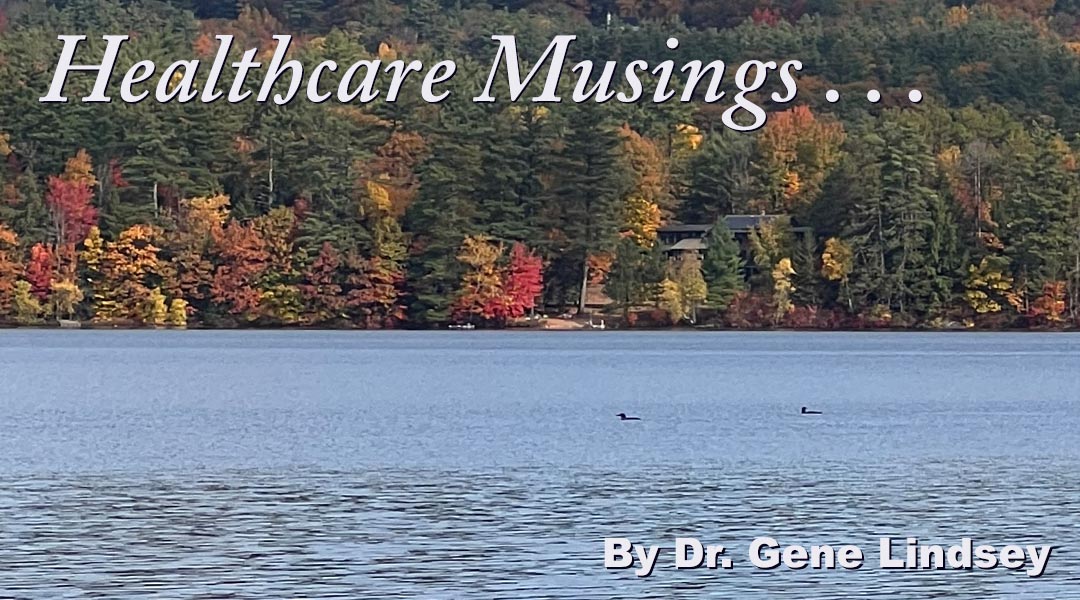
What is not hot is our weather. We have had quite a few glorious fall days, as you can see in the header of this letter. If you look closely, you can see two of our loons, which are still with us. Soon they will depart for the coast of Maine near Wells, where they will spend the winter. We know because they are tagged. Interspersed with the bright days have been quite a few very cool, overcast days with rain.
It has been a while since we topped 70 degrees, and many days like yesterday were both clear and cool. It has been great for walking, but I was hoping for a few days of “Indian Summer.” This weekend, we are expecting much colder weather, with a little snow in the mountains and lots of rain everywhere else. There will also a lot of wind which the weatherman predicts with leave us with some prematurely bare limbs. And so it is as the days drag on through endless political ads and online requests for money that will be a tiny fraction of what Elon Musk is spending. November 3rd seems years away. Time has not dragged on like this since I was 6 years old, waiting for Christmas.
I hope that you are enjoying the fall wherever you are!
Be well,
Gene